
Production Line Automation
AI-powered computer vision for automated monitoring of production lines, conveyors, material flow, object counting, anomaly detection and quality control.
- Counting and classifying objects on conveyors and production lines
- Detection of anomalies, foreign bodies and defects in real time
- Determination of geometric characteristics, color, size and fraction distribution
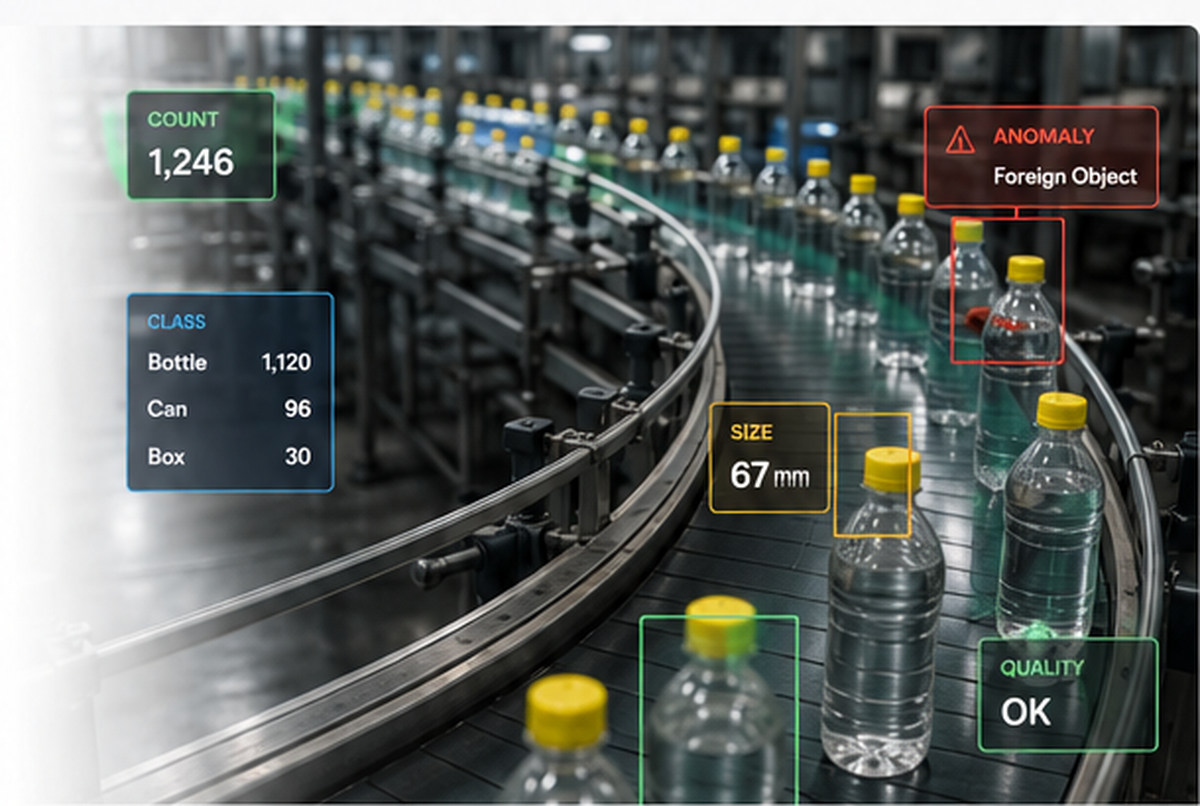
Computer Vision Modules for Production Lines
The system automates manual inspection, reduces dependence on human labor, detects production deviations and helps prevent conveyor failures, defects and unplanned downtime.
Object Counting
Automatic counting of products, items, boxes, parts or material flow on the production line.
Classification
Automatic classification by type, color, shape, size and other product attributes.
Anomaly Detection
Detection of abnormal objects, foreign bodies, impurities and conveyor process deviations.
Measurement
Determination of size, length, diameter, shape and other geometric parameters.
Fraction Analysis
Real-time analysis of material size distribution and granulometric composition.
Real-time Analytics
Dashboards, reports, quality metrics and operational KPIs for data-driven decisions.
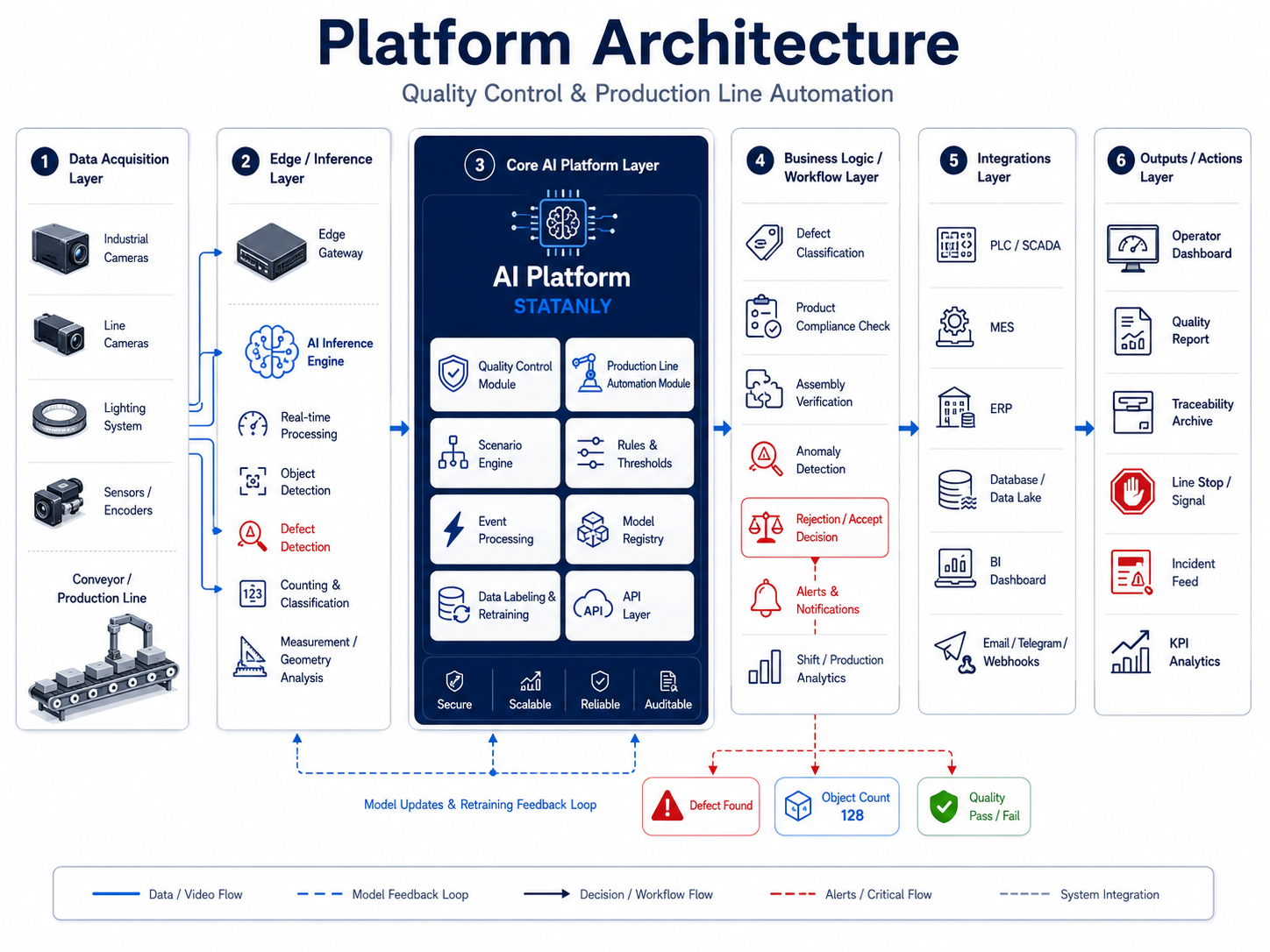
Platform Architecture
The product connects cameras, sensors, scales, PLC / SCADA, IoT devices and MES / ERP systems into one AI platform for real-time analytics, event scenarios, dashboards and integrations.
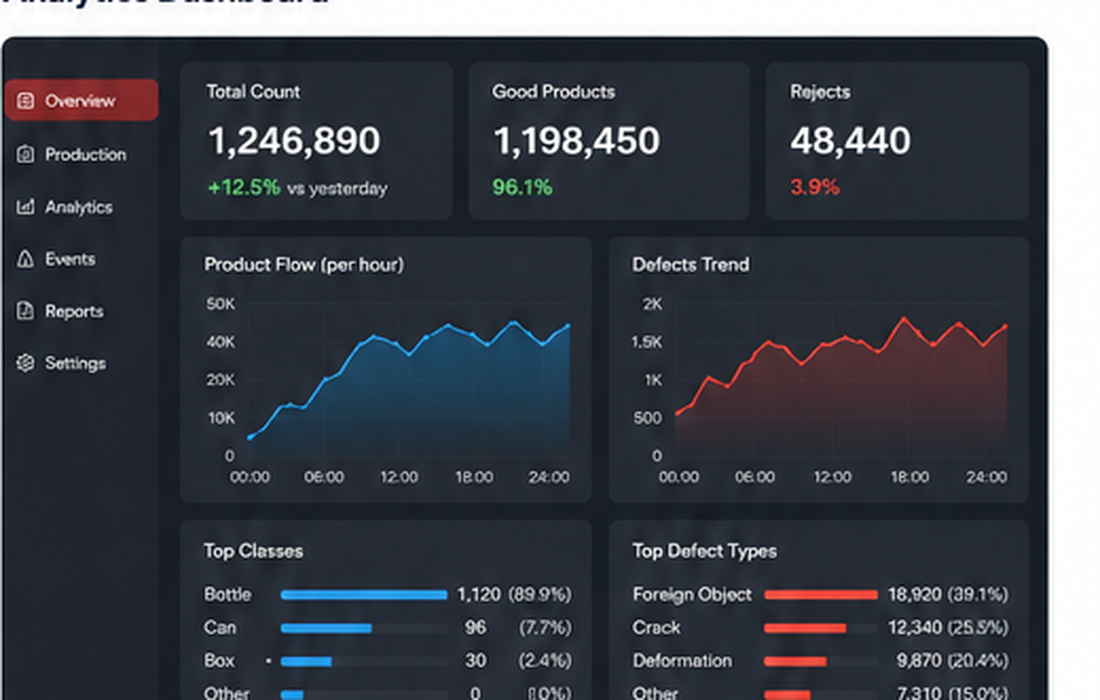
Production Analytics Dashboard
Monitor total count, good products, rejects, product flow, defect trend, top classes and top defect types in a single operational dashboard.
Use Cases Across Industrial Production
The solution is suitable for conveyor systems, production lines, raw material flows, packaging, sorting, mining, food processing and industrial quality control.
Bottling & Packaging
Count bottles, cans and packages. Monitor fill level, labels and packaging quality.
Food Processing
Detect foreign bodies, classify products and monitor size, shape and visual quality.
Mining & Raw Materials
Analyze ore, coal and bulk material fractions, impurities and conveyor flow quality.
Pharmaceutical
Count tablets, capsules and vials. Verify packaging, labeling and completeness.
Electronics
Inspect components, detect defects and verify assembly correctness.
Logistics & Sorting
Classify parcels and items, count objects and optimize sorting throughput.
Product Built on STATANLY AI Platform
The production line automation product includes AI models, configurable control scenarios, real-time analytics, integrations and retraining workflows for adding new object classes, defects and production events.
AI Models Library
Detection, classification, tracking, segmentation, defect recognition and custom product classes.
No-Code Scenario Engine
Configure counting lines, zones, thresholds, event logic, alerts and process rules without rewriting the system.
AI PLATFORM
Detection
Tracking
Industrial Analytics
BI & Reports
Production count, rejects, anomaly history, product classes, quality metrics and shift reports.
Industrial Integrations
Integration with VMS, PLC / SCADA, MES / ERP, BI, IoT, weighing systems and API.
Business impact: automated quality control, reduced manual labor, fewer defects and stoppages, better conveyor visibility and unified AI-driven analytics for production line optimization.